M Slot Card
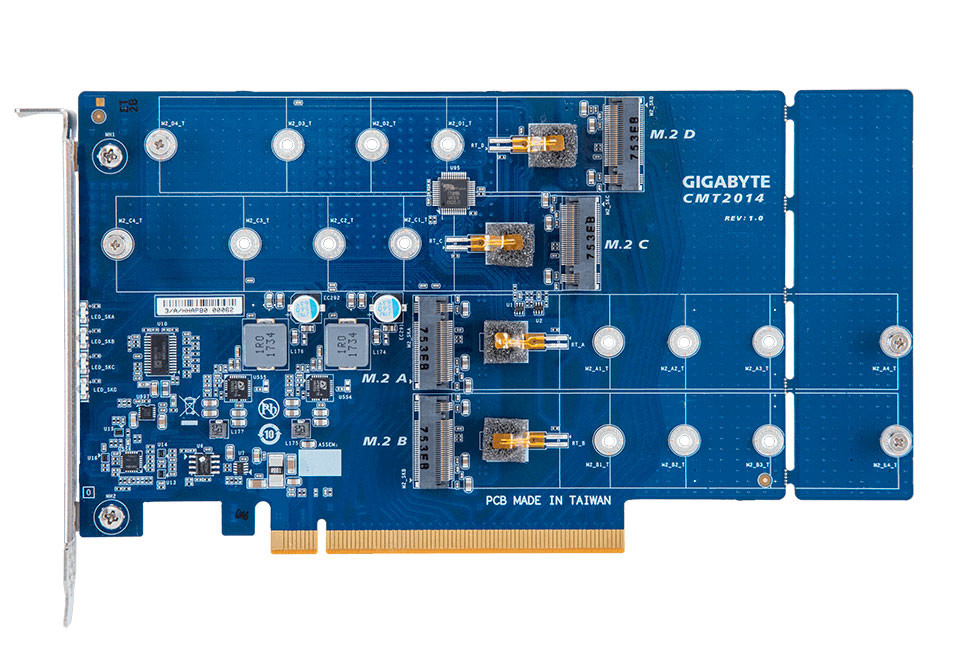
Posted : admin On 4/1/2022Type: PCI-Express 4x Left Slot Card; Compatibility: PCIe 3.0 or PCIe 2.0 x4, x8, or x16 slot; M Key PCIe M.2 NMVe SSD (2230/2242/2260/2280mm) Specifications: Movable M.2 NGFF stand-off and multiple plated-holes supports type 2280, 2260 and 2242 M.2. Supports M.2 NGFF PCIe 80mm, 60mm, 42mm SSDs. Dimensions: 4.72x4.17x2.05 inch. Model #: M2TPCE4X-V2.
Probably the most annoying thing for any computer geek is the lack of proper Wi-Fi connection. Whether we are gamers or casual computer users, having seamless Internet is always a priority. However, we may not be blessed with this all the time, and that’s when we’ll need a M.2 WiFi card to help us out.
M-Cards are backward compatible with current CableCARD devices. In older CableCARD devices that do not support multiple streams, the card appears to be a single stream card. CE companies have long wanted M-Cards for their CableCARD 1.0 host devices in order to compete with devices that use multiple tuners. The ASUS Hyper M.2 x16 Gen 4 Card has four M.2 slots — supporting both PCIe 3.0 and 4.0 — that allow you to expand your system with high-performance SSD storage. While the M.2 standard uses the same 22 millimeter-wide slot for all cards, it’s not necessarily the exact same slot. Since M.2 is designed to be used with so many different kinds of devices, it has some frustratingly similar-looking ports. M.2 PCIe PCI-E Adapter, M.2 to PCI-E3.0 X1 Expansion Card,M2 SSD NGFF NVME (m Key) to PCIe 3.0 x 4 Adapter with Low Profile Bracket for Desktop PCI Express Slot 4.4 out of 5 stars 48 Electronics.
To make the purchase process easier, we have compiled a list of the best M.2 WiFi cards that are available today. Let’s take a look:
Best M.2 WiFi Card
1. Intel 7260NGW Dual Band Wireless
One of the most popular M.2 wireless cards on Amazon, this one is known for being in the affordable range and providing the best experience. It supports Windows 7, Windows 8, and Linux.
Its features are as follows:
- It is fast and provides more coverage than average competitors
- Its capacity is more as well at 802.11ac
- It is Bluetooth 4.0 smart ready
- It has an optimized power saving mode, which helps save battery life when the card is inactive
- It allows roaming among access points
Be sure to check compatibility of your laptop before making a purchase. Also, one thing you should remember is that even though it is compatible with Linux, you may not be able to enjoy all the features.
2. Intel 8265 Generic, 2230, 2×2 AC+BT (8265NGWMG)
This one seems to be fairly popular among users as well as it brings with it 3x faster WiFi speed in comparison to 802.11n and is comfortably in the affordable range.
A few of its best features are as follows:
- You can enjoy up to 3x bandwidth per stream
- It has no antennas
- Users have repeatedly said that this is a much better replacement for Killer adapters that Dell devices usually come with
- It is easy to install and comes with a pictorial instruction guide to help you through the process With this M.2 WiFi card, all your disconnection and slow connection problems are bound to be solved.
3. Intel Dual Band Wireless-AC 7265 802.11ac
This WiFi card is known for its 3x faster speed when compared to 802.11n, 433 Mbps bandwidth (Which is also higher in comparison) and more capacity.
Let’s take a look at a few more features:
- It offers broader coverage
- The battery life is also better because of data transmit efficiencies, which ensure that power consumption is minimal
- Network connectivity remains intact even with low power consumption. Thus, updates to social networks, emails, et cetera continue even when the device is in stand-by mode.
- The card is optimized for devices with thin and light design
- It works well on multiple platforms thanks to its multiple form factors
- It connects easily through Bluetooth 4.0 not just with other Bluetooth products but also with keyboards, mice, headsets, et cetera.
4. M.2 (NGFF) Wireless Card, Wireless Card M.2 (NGFF)
Fairly popular among users, this M.2 WiFi card is slightly more expensive than its aforementioned counterparts. It is a passive adapter that works on PCs that convert NGFF( Half-size mini-card) to the standard PCI-Express 1X slot or USB 9-pin header.
Below are some of its main features:
- It easily works with USB interfaces such as Bluetooth Mini Card, WiMAX, GPS, HSPA, WWAN, CDMA, and 3G
- It is a PCI Express mini card to PCI Express adapter
- It can be used without any software drivers
- It comes with two 6DB antennas
5. Dual Band Wireless-AC 8260 NGFF Wi-Fi Card
This Wi-Fi card is 3rd generation 802.11ac, dual band. It allows a speed of up to 867 Mbps and comes with higher capacity than usual.
Let’s take a look at some of its features:
- It promises much better speed than 2×2 802.11 n
- It has 3x more data capacity
- It comes with WiDi support so that you experience seamless connection even on the big screen
- This Wi-Fi card has a Bluetooth 4.2 Smart Ready through which connecting to Bluetooth, and similar devices is a breeze.
- You must remember to check compatibility before you purchase this Wi-Fi card. It works only on Windows 7, Windows 8, and Windows 10. Also, it only works with certain devices. For example, you can’t use it with Thinkpad, IBM, or Lenovo.
6. Intel 7265 IEEE Bluetooth 4.0 – Wi-Fi Combo Adapter M.2 2230, 1216

Affordable and easy to use, the Intel 7265 IEEE Wi-Fi and Bluetooth card come with M.2 2230 and M.2 1216 form factors. It also has Microsoft InstantGo Support, which means that connectivity is untouched even with low power consumption.
Here are some of its features:
- When compared to 802.11n, the connectivity and Wi-Fi speed is much higher
- The bandwidth is also higher in comparison
- It works with a white list very well
- Even with distance, the connectivity and performance are noticeably good
- Dropped connections are fewer than before, as the user’s state
- It consumes less power and offers a long battery life.
You may need to find the right antennas for this M.2 WiFi card because many users have reported that the antennas that are suggested don’t really work with the device.
7. Intel 7260.HMWG.R Dual Band Wireless Network Adapter
Many users have sworn that this is the best M.2 WiFi card they have come across because it promises better Internet speed and great connectivity. The connection is stable, and the product truly lives up to the name of Intel.
Its features are below:
- It is Bluetooth 4.0 smart ready
- It comes with Intel Smart Connect technology
- It has WiFi hotspot assistant
- It has the larger capacity than the rest of its kind
- Offers Intel wireless display
- You may need to spend some time figuring out the setup and installation, but once that is done, it is a great find.
What is the M2 Expansion Slot? Definition and Benefits
For the replacement of the mSATA specification standard for the mounted internal expansion boards in the computing machines, in 2013, the M.2 came into the market. It was previously known as Next Generation Form Factor (NGFF).
The Mini PCIe also a good standard to improve the usage of the internal expansion in computer boards. But, to create a better environment regarding performance and space, a standard like M.2 was needed.
It has a different physical structure than the Mini PCIe which means that you cannot install the mSATA drives or other bigger wireless network cards in the M.2 slot. You cannot attach the incompatible device to it thanks to its different key structure.
Ragnarok M Card Slot
M.2 has various versions which allow it to take advantage of USB, Audio, PCIe, Display, SATA and I2C buses. The specifications on the M.2 slot defines which kind of card (single or multiple keyed) can be used with it.
After getting a brief knowledge about M.2 and its working, let’s have a look at the advantages of it.
Benefits of using M.2 WiFi card expansion slot
- The M.2 slot allows having more flexible and faster storage and expansion. For example, by using the M.2 SSD, the data transfer speed can be increased up to 30 GB/S which is almost 5 times higher than the traditional SSD.
- It comes in different sizes like smaller or larger and thinner or thicker, so depending on the space that is available in your system, you can pick up the right length of the slot.
- It helps to take advantages of both the AHCI (Advanced Host Controller Interface) and NVME (Non-Volatile Memory Express) command modes to make an easier interface structure.
- The M.2 expansion slot allows using the feature called as ‘DevSleep.’ This feature reduces the power consumption that the M.2 SSD uses to keep some background service on for quick recovery when the system goes into the sleep mode.
Requirements for using an M.2 WiFi card
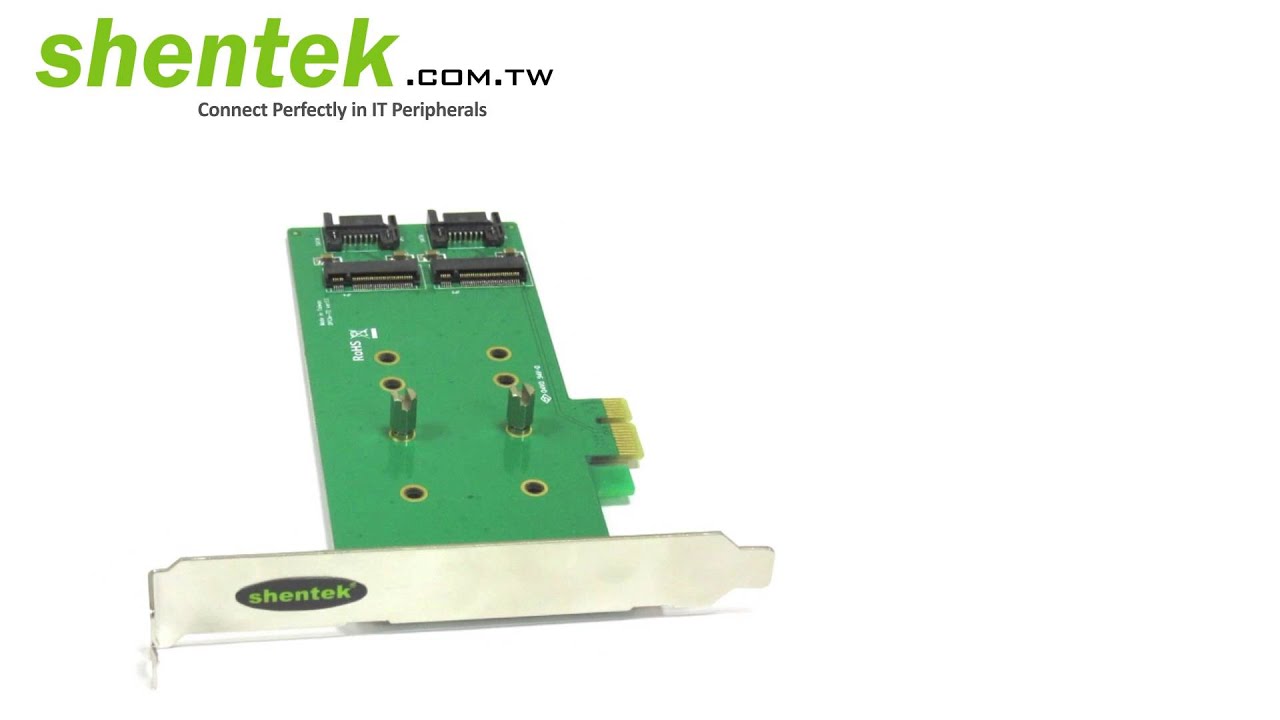
Two main conditions need to be fulfilled to use the M.2 WiFi card in your system; space and key. The system should have a separate space for the M.2 slot in which the M.2 networking card will be inserted. The connector you are using also needs to be having the same type of key types as on the M.2 expansion slot.
Who can use this M.2 expansion slot?

M Slot Card Holder
If you have a modern computer system, then most probably it should have the M.2 expansion slot. It’s not possible for the advanced laptop users as such machines nowadays come with compact designs that are not suitable for the haphazard expansions. For the desktop PC users, it will be easier to have such expansion slot on your compatible motherboard. Check your motherboard manufacturer site for checking the compatibility.
There you go! We hope this list really helped you pick the right WiFi card for your device. If we missed anything here or if you have any cards that you think can make a list, please let us know!
Most solid-state drives released within the last year or so have been too fast for the bus they're connected to. The 6Gbps SATA III spec was finalized in the days when rotational hard drives still ruled and SSDs were rare, ludicrously expensive, and relatively unreliable.
There are a couple of different standards that have been created to solve this problem, and they both solve it in the same basic way. One, SATA Express, uses the same physical connector as older SATA drives but uses PCI Express lanes rather than the SATA bus to boost storage speeds. The other, which will be more common in space-constrained mini-desktops, all-in-ones, and Ultrabooks, is called M.2 (previously NGFF, for 'Next-Generation Form Factor').
M.2 is interesting not just because it can speed up storage with PCI Express lanes, but because it can use a whole bunch of different buses too; it stands to replace both mSATA and mini PCI Express, two older standards that have been used for SSDs and Wi-Fi cards in laptops for a while now. Intel's new Broadwell CPUs and their chipsets include native support for M.2 and PCI Express boot drivers—neither PCIe-connected storage (hi Apple) nor the M.2 connector itself are new, but beginning with Broadwell systems each of those two things will become much more common.
Let's start with the physical connector and the things that connect to it. There's a lot to unpack, starting with the fact that there's more than one kind of M.2 connector, more than one type of interface that can be used with M.2, and more than one kind of M.2 card.
Getting to know M.2
Pictured at the top of this article are four different M.2 cards. The one on the left is a combo Wi-Fi and Bluetooth card. The next one to the right is a Sandisk SSD that uses the SATA bus. The next one is an Intel SSD that also uses SATA. The one on the right is a Samsung SSD that can use up to four PCI Express lanes.
AdvertisementPay attention to two things as you compare and contrast these cards. First, the physical connector on each card is different; each card has different cutouts in the bottom and exposes different pins. Second, the cards are of different lengths and widths. All of this is accounted for in the M.2 spec (PDF).
The different connectors signify different M.2 'module keys.' Each key exposes a different set of interfaces to each card—M.2 can connect directly to the PCI Express bus, but different pins can be used to connect to the USB 2.0 and 3.0 buses, SATA III, DisplayPort, and a variety of other less-prevalent storage buses. Cards with one notch at the bottom are keyed for one specific kind of connector. Cards with two notches can be used in two different kinds of connectors.
Above is a picture of two M.2 slots on the motherboard of an HP Stream Mini. The slot on the left uses module key E, and the one on the right uses module key B. The Wi-Fi card is keyed for slots A and E, so it fits in the left slot with no problems. The Intel SSD is keyed for slots B and M, so it fits in the right slot. The Samsung SSD is keyed for slot M, so it won't fit in either of the Stream's slots.
| Key | Card measurements | Interfaces | Common uses |
|---|---|---|---|
| A | 1630, 2230, 3030 | PCIe x2, USB 2.0, I2C, DisplayPort x4 | Wi-Fi/Bluetooth, cellular cards |
| B | 3042, 2230, 2242, 2260, 2280, 22110 | PCIe x2, SATA, USB 2.0, USB 3.0, audio, PCM, IUM, SSIC, I2C | SATA and PCIe x2 SSDs |
| E | 1630, 2230, 3030 | PCIe x2, USB 2.0, I2C, SDIO, UART, PCM | Wi-Fi/Bluetooth, cellular cards |
| M | 2242, 2260, 2280, 22110 | PCIe x4, SATA | PCIe x4 SSDs |
The table above lays out the keys in common use today—there are others, mostly placeholders to be called into service as newer buses and interfaces are introduced.
Note the four- or five-digit numbers paired with each slot. These are actually codes to refer to the physical dimensions of each card; the first two digits specify the width in millimeters and the second two or three digits specify the length. Our Wi-Fi module is 16mm wide and 30mm long, or 1630. Two of our SSDs are 22mm wide and 80mm long, or 2280. The other SSD is 22mm wide and 42mm long, or 2242. All motherboard slots are 22mm in width, even the ones attached to 30mm-wide cards.
AdvertisementAll current keys can give cards access to two PCI Express lanes, but otherwise interface compatibility is all over the place—so far, it's been pretty easy to guess what kind of peripheral you're dealing with based on the key it uses. Wi-Fi and WWAN cards tend to use keys A and/or E, since they only need the PCI Express or USB 2.0 buses and only need 30mm in length to fit all their key components. SATA SSDs and SSDs that use two PCI Express lanes tend to use keys B and M to maximize compatibility, since both connectors can deliver both SATA III and two PCIe lanes. The very fastest SSDs tend to be M-keyed since it's the only one that delivers four PCIe lanes.
This is a lot to digest, but it's most of what you need to know to understand M.2. There are some other stipulations around the physical thickness of the cards that you can read about in the documentation, but they aren't as important to our discussion today.
The key system isn't always foolproof—our A- and E-keyed Wi-Fi module will physically fit into the B-keyed SSD slot even though the computer won't recognize it there. M.2 is certainly more confusing than the mPCIe and mSATA specs, but in the end it's more flexible. Components can access many different buses through one small internal connector, and you've got a lot of different physical card sizes to play with instead of being tied to either a 'full-height' or 'half-height' card.
M Slot Card Box
The worst thing about M.2 right now is a general scarcity of components. OEMs buying parts directly from manufacturers probably have more choices, end users buying M.2 cards from Newegg or Amazon will find that they have few options, especially compared to the selection of mSATA and mPCIe components. That will change as M.2 goes mainstream and those older connectors begin to fade. Broadwell is a big step forward in that transition.