2 Slot Width Standard Gpu
Posted : admin On 4/6/2022The card measures 285 mm in length, 112 mm in width, and features a dual-slot cooling solution. Its price at launch was 699 US Dollars. EVGA GeForce 8600 GT DirectX 10 256-P2-N751-TR 256MB 128-Bit GDDR3 PCI Express x16 SLI Support Video Card. Core Clock: 540 MHz Max Resolution: 2560 x 1600 DVI: 2 x DVI Chipset Manufacturer: NVIDIA.
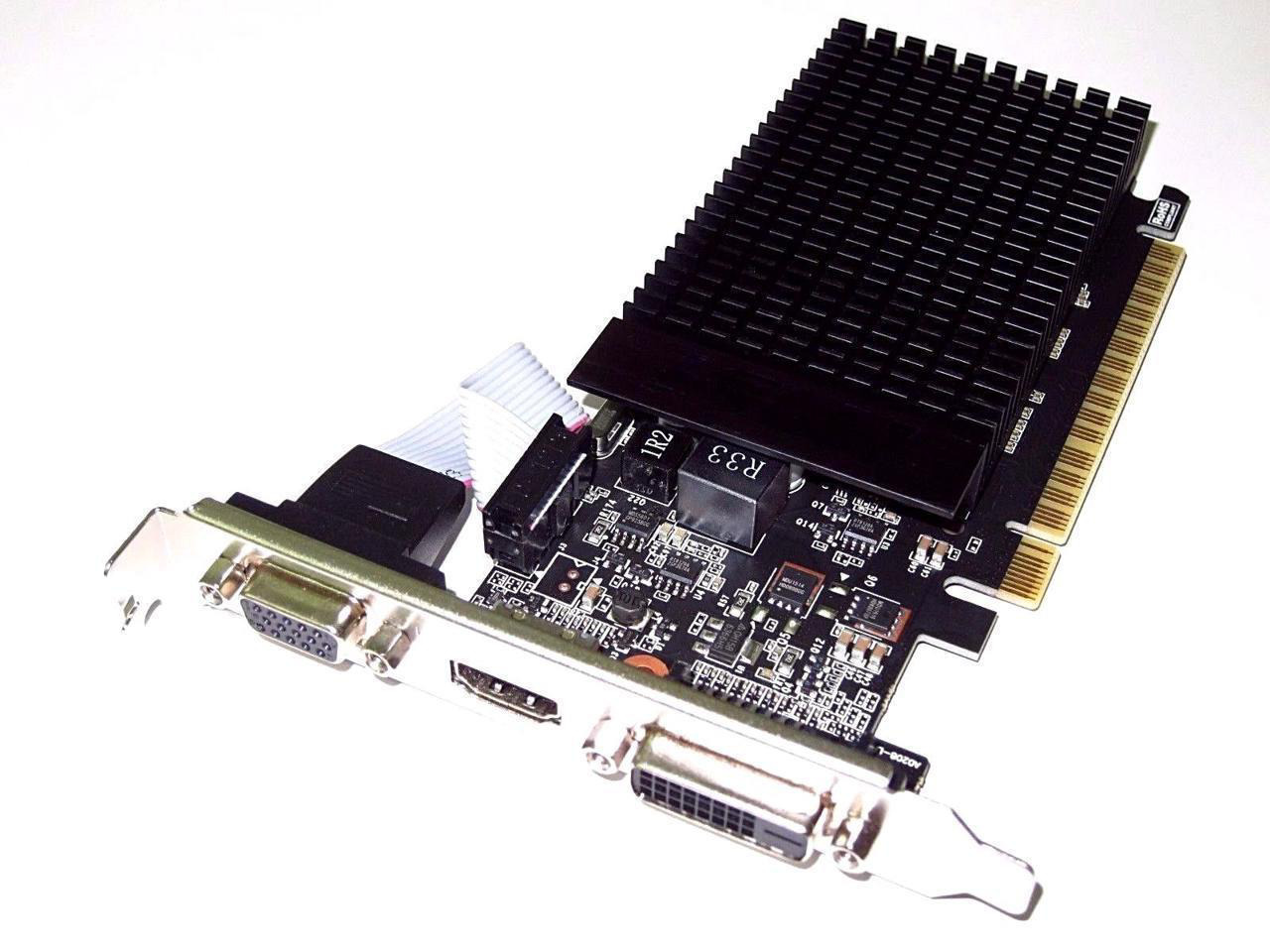
IBM's proprietary Video Graphics Array (VGA) display standard was introduced in 1987, with a maximum resolution of 640×480 pixels. In November 1988, NEC Home Electronics announced its creation of the Video Electronics Standards Association (VESA) to develop and promote a Super VGA (SVGA) computer display standard as a successor to IBM's proprietary VGA display standard. Width: 2.24” / 57 mm. Height measured from top of PCIe connector to the bottom of the locking pin ramps. GPU Type Up to 3-Slot wide, full-length, PCI-Express x16 graphics card. Graphics cards use varied designs based around a common graphics chip. Please ensure the GPU selected meets all size, power, and additional requirements.
One of the features found on the most recent CPUs, chipsets, motherboards, and video cards is the PCI Express 3.0 connection. Nevertheless, does it offer an actual performance improvement over the PCI Express 2.0 standard?
PCI Express 3.0 connection was specified in 2010, with a maximum theoretical transfer rate per lane of almost 1 GiB/s (actually, 984.6 MiB/s), twice the rate of the PCI Express 2.0 standard that offers 500 GiB/s per lane. Thus, a PCI Express 2.0 x16 slot offers a maximum theoretical bandwidth of 8 GiB/s, while a PCI Express 3.0 x16 slot reaches 16 GiB/s.
Base Clock Speed: PCIe 3.0 = 8.0GHz, PCIe 2.0 = 5.0GHz, PCIe 1.1 = 2.5GHz
Data Rate: PCIe 3.0 = 1000MB/s, PCIe 2.0 = 500MB/s, PCIe 1.1 = 250MB/s
Total Bandwidth: (x16 link): PCIe 3.0 = 32GB/s, PCIe 2.0 = 16GB/s, PCIe 1.1 = 8GB/s
Data Transfer Rate: PCIe 3.0 = 8.0GT/s, PCIe 2.0= 5.0GT/s, PCIe 1.1 = 2.5GT/s
PCIe 3.0 features a number of interface architecture improvements, but communicates at the same interface speeds used in PCIe 2.0. PCIe 3.0 achieves twice the communication speeds of PCIe 2.0 through various architecture and protocol management improvements.
Regarding to video cards, all current models are compatible with PCI Express 3.0; the first NVIDIA chips compatible with this standard were from GeForce GT/GTX 6xx generation, while the AMD models use it since Radeon HD 7xxx models.
On the other side, in most cases, is the CPU that supports PCI Express 3.0, not the chipset. However, it is necessary the motherboard also to be compatible with the standard. Intel CPUs support PCI Express 3.0 since the third generation Core i (“Ivy Bridge”) processors. AMD A-series CPUs (aka APUs) support the standard on all FM2+ models. FX processors, on the other hand, do not support PCI Express 3.0, because on this platform, the PCI Express lanes are generated by the chipset, and even the most high-end model, 990FX, supports only PCI Express 2.0.
The X following a PCI Express card refers to the number of lanes the card has. A PCI Express X1 has one lane, while an X16 has 16 lanes. A graphics card, which must push through tremendous amounts of data at high speeds will usually have 16 lanes, while a sound card may only have one lane. You can easily tell the difference between the two by looking at the length of the gold connectors that fit into the motherboard's slot.
As long as a motherboard PCI Express slot is long enough to physically connect a PCI Express card, the card will work. Consequently, a PCI Express X1 will fit in an X16 slot, as will any size between, such as an X4 or X8 card. Each slot can accommodate only a single card. It's not possible to insert two X1 cards in a single slot.
There are a number of devices that connect to the single-lane PCIe slots on a motherboard, including network cards, audio cards and debug cards. The reason PCIe x1 is favored for these devices is because they do not require the massive bandwidth brought about by slots with extra lanes. As a result, 250 MB/s was enough for these devices, and they were created to be connected to PCIe x1 interfaces. Some higher-performing versions of these devices, like 1-Gbit network cards and very high performing audio cards for studio use, probably need an extra lane.
Like most technologies, PCI Express standards have evolved over the years. The original PCI Express 1.0 and 1.1 could transmit up to 2.5 GigaTransfers per second in each lane in both directions simultaneously. This was followed by the PCI Express 2.0 standard, which increased the theoretical limit to 5 GT/s for each lane. The subsequent PCIe 3.0 standard allowed for up to 8 GT/s per lane. Therefore a PCI Express 3.0 X16 with 16 lanes has a theoretical transfer limit of 128 GT/s.
2 Slot Width Standard Gpu Comparison
Most motherboards come with extra PCI Express slots so you can add additional components as needed, which are usually X16 in size. However, the physical size of the slot and the number of lanes doesn't always indicate it offers the full transfer rate. To keep costs down, some X16 slots may have lower speeds. For example, an X16 slot may only have a speed of X4. You should check the motherboard to see what its slot's speed is before installing a new card. This is usually listed with two numbers, the size followed by the speed in the format 'xsize @xspeed'. So a X16 slot with an X8 speed is written as 'X16 @X8'.
Best 2 Slot Gpu
Finally, regarding general video card scope, the improvement of PCIe 3.0 x16 is usually between 5% and 9%. On the other hand, when we used the PCI Express 3.0 x4 slot, there is, in general, a loss of performance on most of the games.
So, if you are looking for a video card, CPU or motherboard to buy, the presence or absence of the PCI Express 3.0 connection should not be a crucial factor do decide what to buy, at least on a single-GPU system.
2.5 Slot Gpu
| GPU Engine Specs: | |
|---|---|
| CUDA Cores | 1920 |
| Boost Clock (MHz) | 1680 |
| Memory Specs: | |
| Memory Clock | 14Gbps |
| Standard Memory Config | 6GB |
| Memory Interface | GDDR6 |
| Memory Interface Width | 192-bit |
| Memory Bandwidth (GB/sec) | 336 |
| Feature Support: | |
| Real-Time Ray Tracing | Yes |
| NVIDIA GeForce Experience | Yes |
| NVIDIA Ansel | Yes |
| NVIDIA Highlights | Yes |
| NVIDIA G-SYNC™-Ready | Yes |
| Game Ready Drivers | Yes |
| Microsoft DirectX | 12 |
| Vulkan API | Yes |
| OpenGL | 4.5 |
| Bus Support | PCI-E 3.0 X16 |
| OS Certification | Windows 7, 10, Linux, FreeBSDx86 |
| Display Support: | |
| Multi Monitor | Yes |
| Maxmium Digital Resolution | 7680x4320 |
| HDCP | 2.2 |
| Standard Display Connectors | HDMI 2.0b, 3x DisplayPort 1.4 |
| InternalAudio Input for HDMI | Internal |
| Standard Graphics Card Dimensions: | |
| Length | 196mm |
| Height | 113mm |
| Width | 2-slot |
| ITX Compatible | Yes |
| Thermal and Power Spec: | |
| Minimum System Power Requirement (W) | 500 |
| Supplementary Power Connectors | 8-pin |
| Accessories: | |
| Driver CD Kit | Yes |